
The Credential Ecosystem Layer: What Comes After Foundational ID
Foundational identity programs — India’s Aadhaar, the MOSIP platform deployments across Africa and Asia, national ID programs worldwide — have given billions of people a verified identity for the first time. They answer the foundational question: who is this person?
But identity alone doesn’t deliver services. A person with a verified identity still needs a health credential to access healthcare, an educational certificate to prove qualifications, a professional license to practice their trade, and a benefit eligibility credential to receive social services. Each of these is a credential — issued by a different authority, governed by different rules, with a different lifecycle.
The foundational ID is the root. The credential ecosystem is the tree.
The gap between identity and services
Most foundational ID programs stop at identity verification. The citizen has a national ID number and can prove they are who they claim to be. But the programs that transform this identity into actionable credentials — health cards, student IDs, professional licenses — are typically built separately, by separate ministries, on separate technology stacks, with separate verification infrastructure.
The result: a citizen has an identity but still carries a folder of paper documents to access services. The identity is digital. The credentials aren’t.
The credential ecosystem layer
A credential ecosystem platform sits on top of foundational identity. It provides the infrastructure for any authorized organization to issue, verify, and manage verifiable credentials — using the foundational identity as the root of trust.
The KeyShare Digital ID Platform implements this layer:
- The foundational ID (from Aadhaar, MOSIP, or any national ID system) is the identity root — the verified “who.”
- Organizations (health ministries, education boards, licensing authorities) use the platform to issue verifiable credentials — the “what.”
- The Trust Governance Service manages which organizations can issue which credential types.
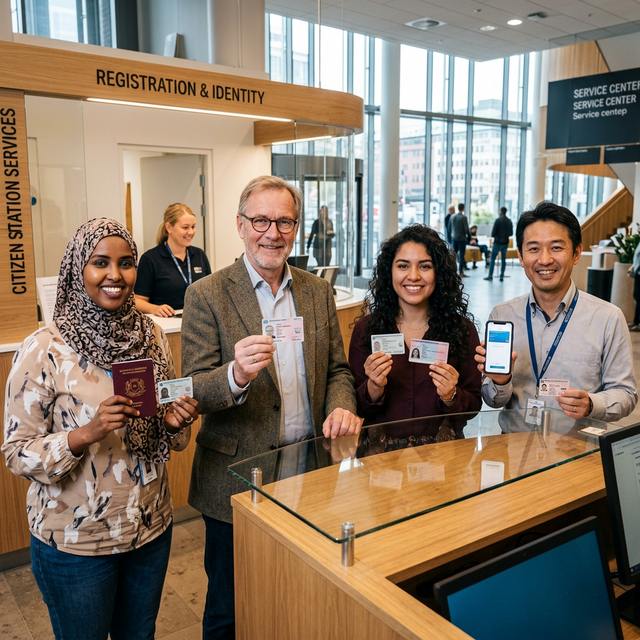
- Citizens carry all their credentials in a single wallet — identity + health + education + professional + social benefits.
The platform doesn’t replace the foundational ID system. It extends it. It takes the “who” and adds the “what” — in a standards-based, interoperable, offline-capable format.
Complementarity, not competition
This is a common concern for countries with existing foundational ID investments: “Do we need to replace our identity system?”
No. The credential ecosystem layer is complementary. It consumes the output of the foundational ID system (a verified identity) and uses it as the starting point for credential issuance. The foundational ID doesn’t need to change. The credential layer adds capability on top.
For MOSIP-based deployments specifically: MOSIP provides the identity registration and authentication infrastructure. KeyShare provides the credential issuance, lifecycle management, and verification infrastructure. The citizen authenticates with MOSIP and receives credentials through KeyShare. The two systems interoperate through standard APIs.
A concrete example
Consider a country that has deployed MOSIP for national ID. 80% of citizens have a verified identity. Now the Ministry of Health wants to issue digital vaccination records. The Ministry of Education wants to issue digital diplomas. The professional licensing board wants to issue digital trade certificates.
Without a credential ecosystem layer, each ministry builds its own system. Three separate issuance platforms. Three separate verification mechanisms. Three separate wallet apps (or worse — paper certificates with QR codes). The citizen manages three separate credentials in three separate systems that don’t interoperate.
With a credential ecosystem layer, all three ministries issue credentials through the same platform. The citizen authenticates once (via their MOSIP identity) and receives all three credentials in one wallet. A verifier — an employer, a hospital, a border crossing — can check any credential from any ministry using the same verification infrastructure. The Trust Governance Service ensures each ministry can only issue the credential types it’s authorized for.
The citizen’s wallet grows from “one ID card” to “complete identity portfolio” — and the infrastructure investment for each new credential type is a schema definition and an Organization Integration Bridge, not a new platform.
What this enables downstream
The compound effect of a credential ecosystem is that new use cases become trivial once the platform exists. A farmer needs a subsidized seed allocation? Issue an agricultural eligibility credential. A driver needs proof of vehicle registration? Issue a registration credential. A refugee needs temporary work authorization? Issue a time-limited employment credential.
Each of these use cases would normally require a separate IT project, a separate budget, and separate verification infrastructure. With a credential ecosystem layer in place, they require only a schema definition and an integration bridge. The platform, the wallet, the trust framework, and the verification infrastructure already exist.
This is the scale argument for governments: the credential ecosystem layer is expensive for the first use case and nearly free for every subsequent one.