
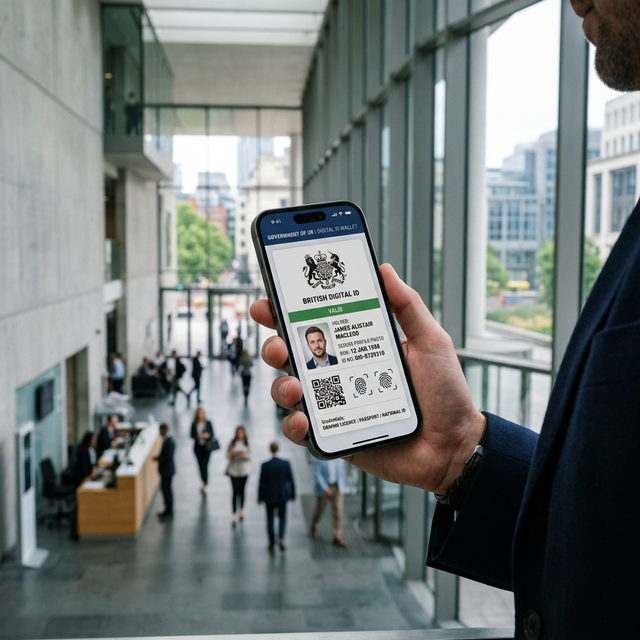
The Static Wallet Problem: Why a Government ID in a Government App Isn’t Enough
Governments around the world are launching digital identity programs. The typical pattern: build a wallet application, issue a credential (usually a digital driver’s license or national ID), distribute it to citizens, and declare success.
The credential works. Citizens can present their digital ID at airports, border crossings, and police stops. The app is functional. The cryptography is sound.
And then — nothing happens. The wallet sits on the phone with one credential. The ecosystem that was supposed to grow around it never materializes. The government has built a digital ID card, not a digital identity infrastructure.
This is the static wallet problem.
What a static wallet looks like
A static wallet is a credential container. It stores one or more credentials. It presents them when asked. It verifies their cryptographic signatures. It may support selective disclosure. It does all of this correctly.
What it does not do: enable new credential types to be issued without application-level changes. Support workflow-driven issuance where organizations define their own credential schemas and issuance rules. Provide a trust governance framework that allows new organizations to join the ecosystem without central gatekeeping. Operate offline in environments where connectivity is unreliable. Enable credential interactions beyond simple presentation — revocation, suspension, re-issuance, delegation, or multi-credential workflows.
A static wallet answers the question: “Can I show my ID on my phone?” A workflow-driven ecosystem answers the question: “Can any authorized organization issue any credential type to any citizen, with governance, offline capability, and lifecycle management — without modifying the wallet application?”
The distinction matters because the value of digital identity scales with the number of use cases it enables, not the number of credentials it stores. A wallet with one credential that works at the airport is useful. An ecosystem with health credentials, educational certificates, professional licenses, and government permits — all issued by different organizations, governed by a trust framework, and presentable offline — is transformative.
Why static wallets stay static
Three architectural decisions lock wallets into the static pattern.
Application-coupled credential types. When adding a new credential type requires modifying the wallet application (new screens, new data models, new presentation logic), the wallet team becomes a bottleneck. Every government ministry that wants to issue a credential must wait for the wallet development team to build support. At government IT velocity, this means new credential types arrive on a timeline measured in years, not months.
Central issuance architecture. When all credentials must be issued through a single central system, the system becomes a chokepoint. A national health ministry shouldn’t need to route credential issuance through the national ID authority’s infrastructure. They should be able to issue health credentials directly — authorized by the trust framework, not by the central IT team.
Online-only verification. When credential verification requires a real-time connection to the issuing authority, the wallet is useless in low-connectivity environments. Rural health clinics, remote government offices, field-based social workers — the places where digital identity has the most impact are often the places with the least connectivity.
What a workflow-driven ecosystem looks like
The KeyShare Digital ID Platform is designed around a different architecture: the wallet is a platform, not an app.
Schema-driven credential types. New credential types are defined as schemas — data structures that specify what attributes a credential contains, who can issue it, and what governance policies apply. Adding a new credential type doesn’t require modifying the wallet application. The wallet renders any credential that conforms to a supported format (W3C Verifiable Credentials, ISO 18013-5, SD-JWT VC). The Ministry of Health can define and issue health credentials without touching the wallet codebase.
Decentralized issuance. Organizations join the ecosystem by obtaining an attestation from the Trust Governance Service — proving they are authorized to issue specific credential types under the trust framework. Once attested, they issue credentials directly to citizens through their own systems, using the Organization Integration Bridge to translate between their data model and the platform’s credential model. No central issuance bottleneck.
Offline-first verification. Verification devices (Pucks, NFC readers, mobile verifiers) cache trust data locally. Credential verification works without connectivity — the verifier checks the credential’s cryptographic signature against cached issuing authority keys. When connectivity returns, cached data syncs. Citizens in low-connectivity environments receive the same verification experience as citizens in capital cities.
The ecosystem effect
When adding a credential type takes days instead of years, and when any authorized organization can issue credentials without waiting for central IT, the ecosystem grows. Health credentials. Educational certificates. Professional licenses. Social benefit eligibility. Land titles. Business registrations.
Each new credential type adds value to every existing credential in the wallet — because the wallet becomes the citizen’s complete identity portfolio, not just a digital ID card. And because the trust framework governs which organizations can issue which credential types, the ecosystem grows without sacrificing trust or governance.
This is the difference between a digital ID project and a digital identity infrastructure. The static wallet is a project. The workflow-driven ecosystem is infrastructure.
This is what it means to be DPI-native — the platform enables an ecosystem, not just a credential.