How to 4x Your Hotel Loyalty Enrollment Without Adding a Single Form
The average hotel loyalty enrollment rate is 14%. That means 86 out of every 100 guests walk out without joining the program — even at properties where the front desk is trained to ask every guest, every time.
The problem isn’t that guests don’t want loyalty benefits. It’s that enrollment requires effort at the worst possible moment.
The friction tax
Consider what enrollment looks like today. The guest has just arrived — probably after a flight, a drive, or a long day. They want their room. The front desk agent asks: “Would you like to join our rewards program?” The guest says yes. Then: “I’ll need your email address, phone number, and a signature on this form.”
That’s the moment enrollment dies. The guest is tired. They don’t want to spell their email address out loud in a lobby. They definitely don’t want to fill out a form. So they say “maybe next time” — and next time never comes.
The loyalty team knows this. They’ve tried QR codes on room cards, follow-up emails, and in-app prompts. Each approach adds a step between the guest’s “yes” and the enrollment completion. Every step costs conversion.
What frictionless enrollment actually looks like
The insight is that at the moment of check-in, the hotel already has everything it needs to enroll the guest — if the guest has verified their identity digitally.
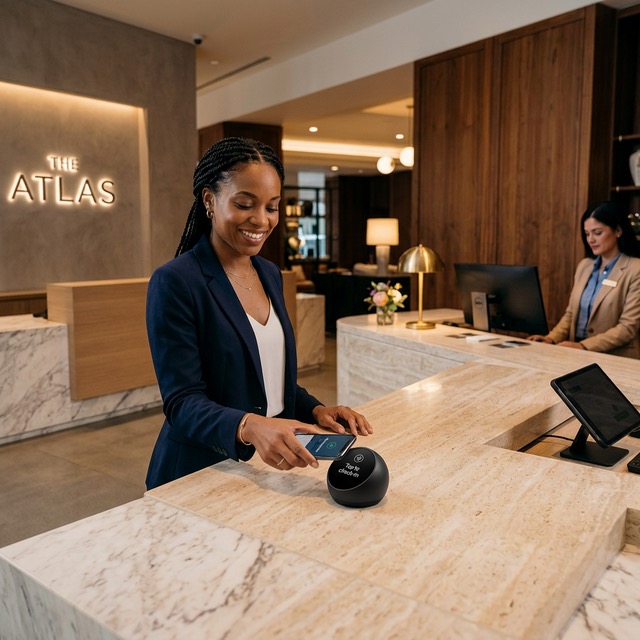
When a guest taps their phone on the Puck to verify their identity, the system receives their verified name, date of birth, and — with the guest’s explicit consent — email address. These are the exact fields required for loyalty enrollment at most programs.
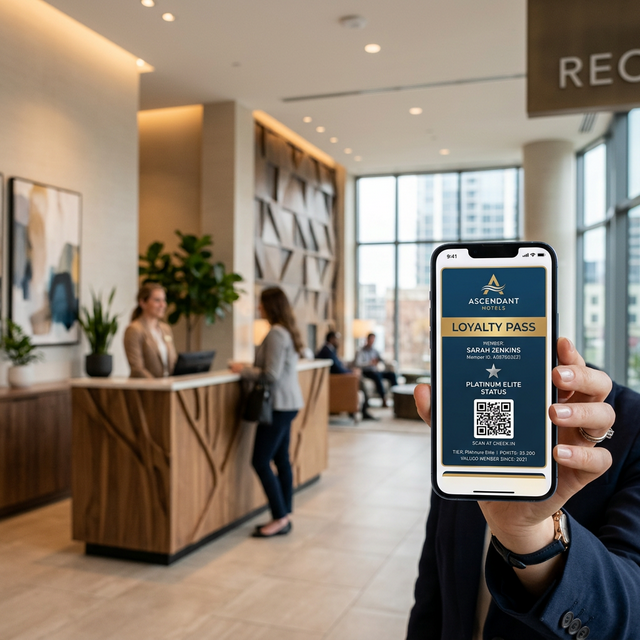
The enrollment conversation changes from “Can I get your email?” to “Would you like to join our rewards program? Just tap again.” One tap. No typing. No forms. The loyalty pass lands in the guest’s native mobile wallet — the same wallet that just received their room key.
The Guest Experience Platform (GEP) handles the mechanics: checking enrollment eligibility, querying the loyalty system for existing membership, capturing explicit consent (logged as an auditable event), creating the membership record, and delivering the wallet pass — all within the same check-in interaction.
Why consent matters more than speed
Frictionless does not mean invisible. Guest consent for loyalty enrollment must be explicit and auditable — not buried in a terms-of-service checkbox.
The system captures a timestamped consent event: the offer presented, the guest’s response, the agent or kiosk that facilitated the enrollment, and the property. For properties operating under GDPR, the enrollment prompt includes configurable consent language, and the consent record is stored separately from the enrollment record. This is the right architecture for a world where privacy regulators are paying attention to how consent is captured, not just whether it was captured.
The 30-day cooldown
Not every guest says yes. The system respects that. After a guest declines enrollment, a 30-day cooldown prevents the same guest from being asked again at the same property. This is a small detail with outsized impact on guest experience: nothing erodes goodwill faster than being asked the same question every time you check in.
What the numbers look like
Properties using one-tap enrollment from verified identity in early deployments are seeing enrollment rates that approach 57% — roughly four times the industry average. The driver isn’t a more aggressive sales pitch. It’s the elimination of friction at the moment the guest is most willing to say yes.
For a 150-room hotel with 36,000 annual check-ins, the difference between 14% and 57% enrollment is an additional 15,480 loyalty members per year. Each of those members has higher lifetime value, higher direct booking rates, and lower acquisition costs than non-members. The loyalty team’s marketing ROI improves without changing a single campaign.
The VP of Marketing’s question
Brand loyalty directors often ask: “If enrollment happens at the Puck, does the data flow to our CRM or to KeyShare’s system?”
The answer depends on the integration model. For properties using the native wallet flow (no brand app), enrollment data flows through the GEP. For brands that integrate the Wallet SDK into their own loyalty app, the enrollment happens inside the brand’s app — the brand controls the data flow, the CRM integration, and the marketing automation triggers. The GEP provides the orchestration; the brand keeps the data.
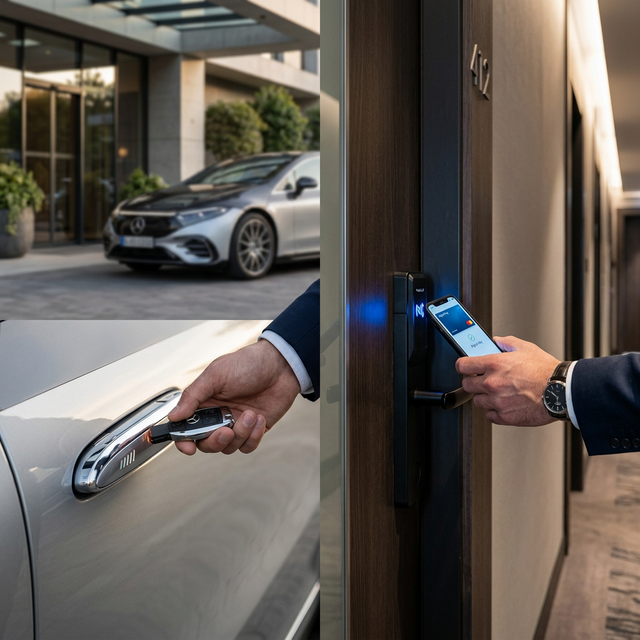
The same tap that delivers the room key — the wallet-native approach — also powers this enrollment flow.
See how frictionless loyalty enrollment fits into the complete check-in experience →