Why Hotel Mobile Key Adoption Is Stuck at 10% — and How to Fix It
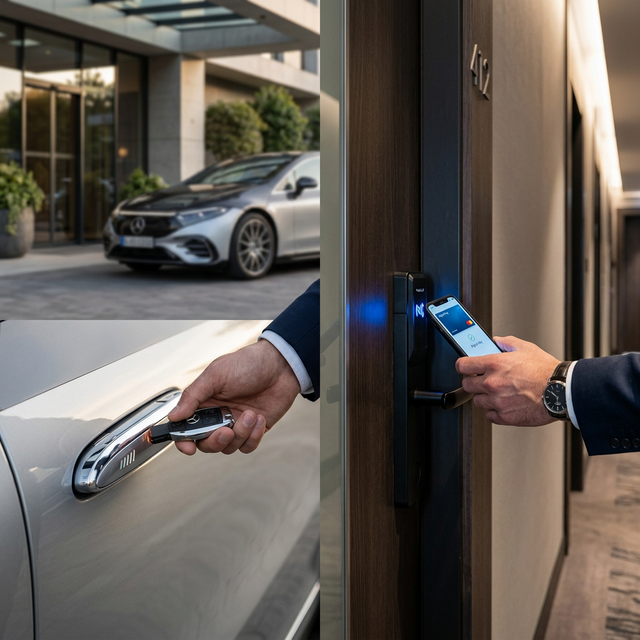
The hospitality industry has been talking about mobile keys for a decade. Hilton launched Digital Key in 2015. Marriott followed. By now, mobile keys should be the default way guests enter their rooms.
They aren’t. Industry-wide adoption hovers below 10%.
That’s not a technology failure. The underlying technology — Bluetooth Low Energy, NFC, digital credentials — works. The failure is in the delivery model. Hotels have been asking guests to do too much work to receive something that should be effortless.
The app download wall
The single biggest barrier to mobile key adoption is the requirement to download a brand app before check-in. The math is straightforward: every additional step between “I’d like my room key” and “I have my room key” reduces completion rates.
For a typical mobile key flow today, the guest must download the app (if they don’t have it), create an account (if they don’t have one), log in, navigate to the key section, and activate the key. That’s five steps before the door opens. For a guest arriving at midnight after a delayed flight, this is not an experience — it’s an obstacle course.
The result: the guests who use mobile keys are the guests who already have the brand app installed and are already logged in. That’s the loyalty elite — maybe 8–12% of arrivals at a major chain. Everyone else gets a plastic keycard.
The BLE reliability problem
Even among guests who complete the download, Bluetooth-based mobile keys have a reliability perception problem. BLE key delivery requires the phone’s Bluetooth to be active, the lock to be in range, and the connection to establish within a few seconds. When it works, it works well. When it doesn’t — and even a 5% failure rate is noticeable at scale — the guest walks back to the front desk. That single failure erases the convenience value of every successful tap that preceded it.
The operational impact compounds. Front desk staff spend time troubleshooting BLE connections instead of welcoming guests. IT teams field tickets about “the mobile key didn’t work.” The GM hears complaints and quietly deprioritizes the rollout.
What needs to change
The delivery model needs to invert. Instead of requiring the guest to prepare (download, register, authenticate) before receiving a key, the key should arrive during a natural interaction the guest is already having.
That natural interaction is check-in.
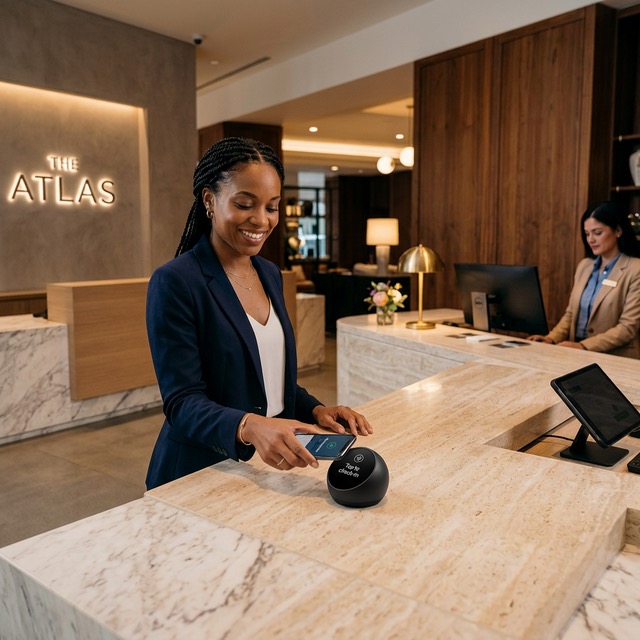
When a guest checks in — whether at the front desk, a kiosk, or a reception tablet — they’re already present, already identified, and already expecting to receive a room key. The key delivery mechanism should meet them there, in that moment, with zero prerequisites.
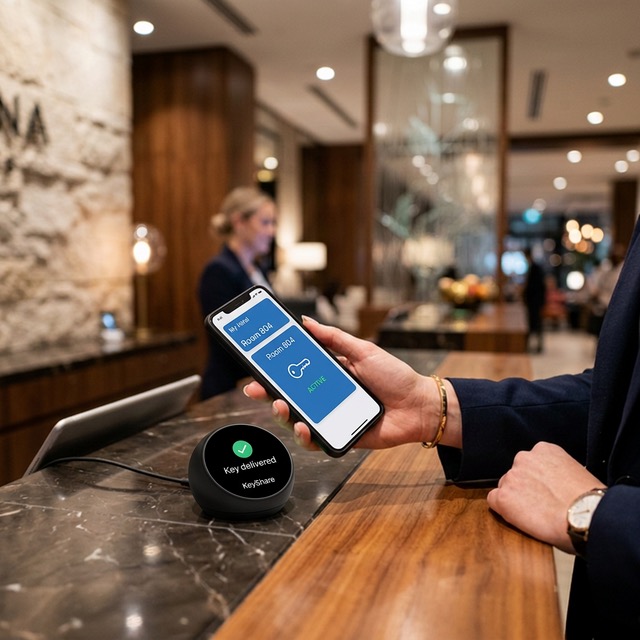
This is the architectural insight behind the wallet-native approach to hotel mobile keys. Instead of delivering keys through a brand app that requires download and authentication, wallet keys are provisioned directly to the guest’s native mobile wallet during the check-in interaction — via a single NFC tap on the KeyShare Puck.
No app download. No account creation. No Bluetooth pairing. The guest taps their phone, and the key appears in the same wallet they use for boarding passes and credit cards.
The adoption math changes
When you remove the app download requirement, the addressable population changes from “guests who have your brand app” to “guests who have a phone with a mobile wallet.” That’s not 10% of arrivals — it’s north of 70%.
Early deployments of wallet-native key delivery bear this out. Properties that have moved from app-dependent mobile keys to wallet-native delivery see adoption rates that are multiples of the industry average — not because the underlying key technology is different, but because the delivery friction disappeared.
The lock vendor question
One objection hotel IT teams raise: “We’re locked into our lock vendor’s mobile key ecosystem.” This is a legitimate concern. Most mobile key systems today are tightly coupled to the lock vendor — Assa Abloy’s mobile key works with Assa Abloy locks, SALTO’s with SALTO locks.
A wallet-native approach decouples key delivery from the lock vendor. The orchestration platform handles the lock vendor integration on the backend; the guest experience is consistent regardless of which locks are installed. A property with Assa Abloy locks and a property with SALTO locks deliver the same wallet key experience to the guest.
This matters especially for chains with mixed lock estates across properties — which is most chains.
What this means for your property
If your mobile key adoption is below 15%, the problem is almost certainly the delivery model, not the technology. The question to ask is: how many steps does a guest need to complete before they have a working room key on their phone?
If the answer is more than one, that’s your bottleneck.