The Night Audit Is Dead: How Hotels Are Running 24/7 Without Night Staff
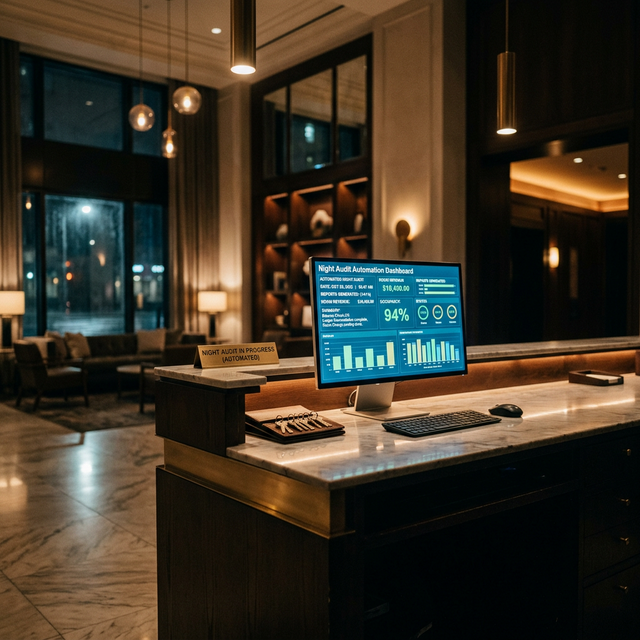
The night audit shift is the most expensive per-guest-served position in hotel operations. A night auditor at a 150-room limited-service property handles 5–15 check-ins between 11 PM and 7 AM — at a fully loaded labor cost of $40,000–$60,000 per year. That’s $7–$33 per late-night check-in in labor alone, compared to $1–$3 during peak hours when staff are serving dozens of guests.
For limited-service and select-service properties, the math has never made sense. But the alternative — unmanned overnight operation — required two capabilities that didn’t exist until recently: self-service identity verification and contactless key delivery.
What the night auditor actually does
Strip away the accounting tasks (which are increasingly automated by cloud PMS platforms) and the night auditor’s primary function is: be present when a guest arrives late, verify their identity, assign a room, and hand them a key.
This is a guest-facing role that requires a human because of two dependencies. First, identity verification has historically been a visual task — a person looks at a physical ID card and judges whether it matches the person in front of them. Second, key delivery has historically been physical — someone programs a keycard and hands it across the counter.
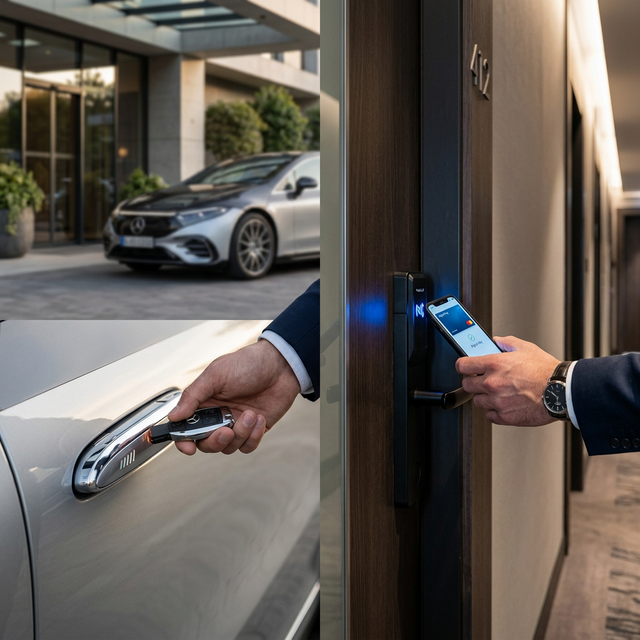
When both dependencies are resolved — identity verification via cryptographic digital ID, key delivery via NFC wallet provisioning — the human presence is no longer operationally necessary for the core check-in function.
Self-service overnight check-in
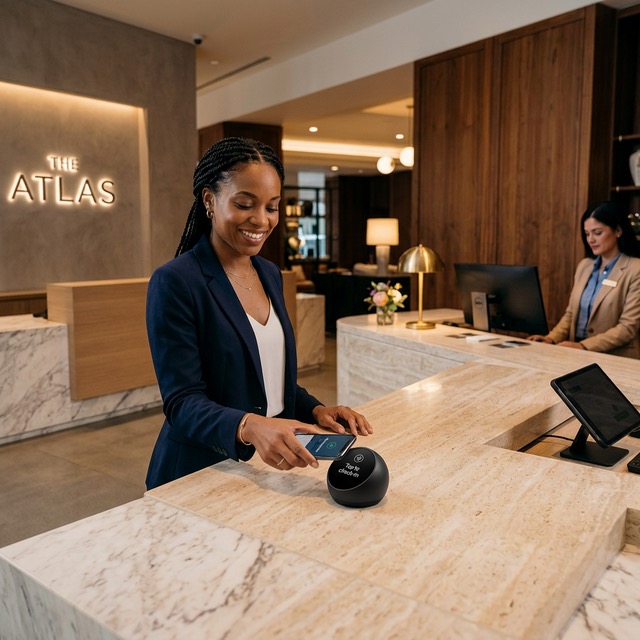
A Puck on a kiosk stand in the lobby handles overnight check-in without staff:
- Guest approaches the Puck (signage directs them: “Check in here”).
- Guest taps their phone — the same 60-second check-in flow available during daytime, now available overnight without staff. Digital ID verified, reservation matched, wallet key provisioned.
- Guest walks to their room.
The Guest Experience Platform (GEP) orchestrates the entire workflow. Identity verification is cryptographic — no visual judgment required. Key delivery is digital — no physical card to encode. Compliance logging is automatic — every interaction is timestamped with verification results, consent records, and key delivery confirmation.
For walk-in guests without a reservation, the kiosk UI (or, in the future, the AI Concierge) guides the guest through reservation creation, identity verification, and payment capture. The flow is longer but fully self-service.
What you save
| Line Item | Night Auditor | Self-Service |
|---|---|---|
| Annual labor cost | $40K–$60K | $0 (platform cost absorbed by daytime operations) |
| Check-in capability | Limited to one guest at a time | Multiple Pucks can serve simultaneous arrivals |
| Identity verification | Visual (subjective) | Cryptographic (mathematical) |
| Compliance logging | Manual entries, inconsistent | Automatic, complete, auditable |
| Guest experience at 2 AM | Variable (depends on the person working that shift) | Consistent (same flow as daytime) |
The savings are straightforward for ownership to evaluate: the night auditor salary is a known number. The platform cost is a known number. The comparison is direct.
When you still need someone on-site
Self-service check-in eliminates the need for a dedicated night auditor, but it doesn’t eliminate all overnight staffing. Security, maintenance emergencies, and guest situations that exceed the system’s capability (complaints, medical events, unusual requests) still require human presence at some properties.
The operational model that’s emerging: security staff who are cross-trained on the check-in system handle the exceptions. The Puck handles the 90%. The human handles the 10%.
See how self-service check-in fits the complete hotel solution →