Hotel Self-Service Check-In: Kiosk vs. App vs. Wallet — Which Wins?
Hotels have been trying to reduce front desk dependency for years. Three self-service models have emerged, each with distinct tradeoffs.
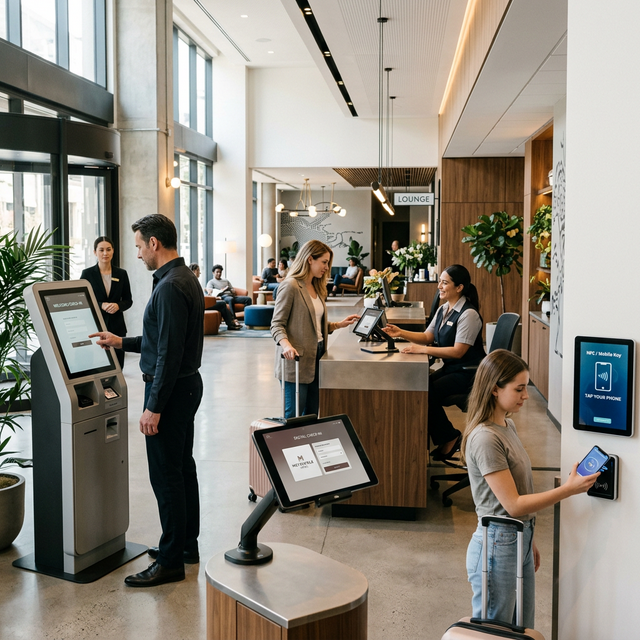
Dedicated kiosks — standalone hardware in the lobby that handles check-in without staff involvement. Think airline kiosks at the airport.
Brand apps — the hotel’s mobile application, which the guest downloads and uses to check in before or upon arrival.
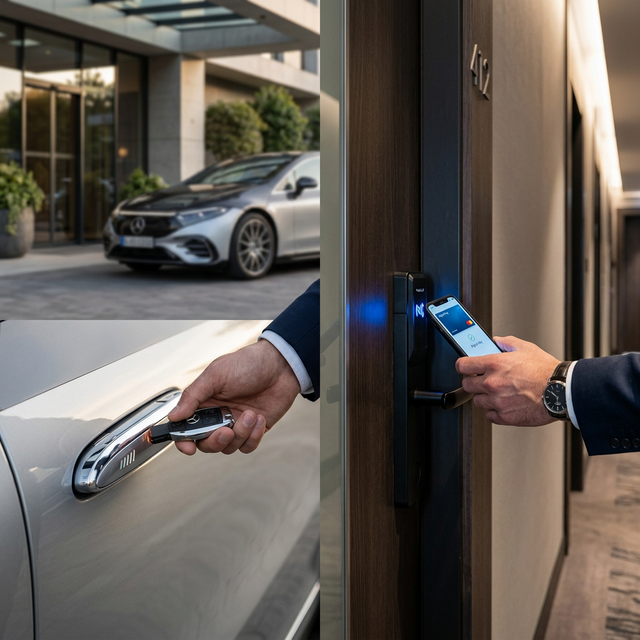
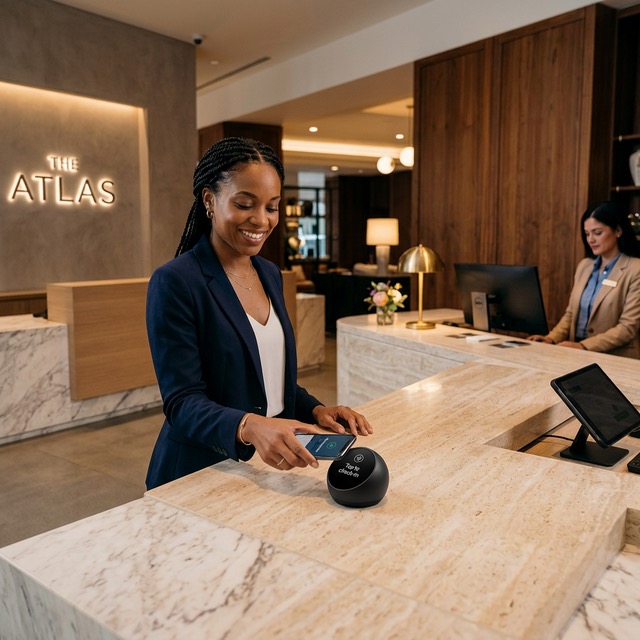
Wallet-native — the guest’s existing native mobile wallet receives credentials (room keys, loyalty passes) during a brief NFC interaction, with no app download required.
Each approach reduces front desk load. But they differ dramatically in adoption rate, capital cost, maintenance burden, and guest experience.
Adoption rate: the metric that matters
The best check-in technology is the one guests actually use. A kiosk that 15% of guests use is less impactful than a wallet flow that 70% of guests use — even if the kiosk experience is slightly better for the guests who use it.
Kiosks: 15–30% adoption. Kiosks work well for tech-comfortable guests at full-service and limited-service properties. But many guests walk past kiosks out of habit, uncertainty, or preference for human interaction. Kiosk adoption is highest at properties where staff actively direct guests to kiosks — which partially defeats the purpose of self-service.
Brand apps: 8–12% adoption. App-based check-in requires the guest to have the app installed and logged in before arrival. This limits adoption to loyalty members with the app — a small fraction of total arrivals. Casual guests, first-time visitors, and guests at franchise properties with low brand engagement don’t use the app.
Wallet-native: designed for 70%+ adoption. When the room key is delivered to the guest’s native mobile wallet during a single NFC tap — no download, no account, no login — the addressable population expands from “guests with our app” to “guests with a phone.” Early deployments bear this out — adoption rates track phone wallet penetration, not app installation. This is why wallet-native delivery solves the adoption problem that kiosks and apps cannot.
Capital and operating cost
Kiosks: $5,000–$25,000 per unit (hardware, software, installation) plus annual maintenance, software licensing, and the physical footprint they consume in the lobby. A property needs at least two kiosks to handle peak check-in without queuing. Kiosks also require ongoing maintenance — screens crack, card dispensers jam, printers run out of paper for receipts.
Brand apps: low marginal cost but high development cost. The app itself costs $200K–$1M+ to build and maintain (for a chain-level app with check-in capability). But the marginal cost per check-in is near zero. The challenge is that the development cost is amortized over a small adoption base — if only 10% of guests use the app, the per-user development cost is high.
Wallet-native: platform cost. The KeyShare Puck and Guest Experience Platform (GEP) have a platform cost — but the Puck also handles identity verification, loyalty enrollment, and payment capture (not just key delivery). The marginal cost per wallet key is near zero. No dedicated lobby hardware beyond the countertop Puck.
Maintenance and operational burden
Kiosks require physical maintenance. Screens, printers, card dispensers, and the enclosure itself need servicing. Software updates require coordination with the kiosk vendor. When a kiosk is down, it sits in the lobby visibly broken — a negative signal to arriving guests.
Apps require continuous development. OS updates (iOS and Android release annually), feature requests from marketing, security patches, App Store review cycles, and the constant battle against app abandonment. The team maintaining the check-in app is not free — even if no individual check-in costs money.
Wallet-native requires platform management. The GEP software and Puck firmware are maintained by KeyShare. PMS adapter updates are coordinated with PMS vendor releases. The property’s operational burden is configuration — not development or hardware maintenance.
The hybrid answer
Most properties will use a combination. A kiosk or Puck for walk-in self-service. The brand app for loyalty guests who prefer the digital pre-arrival experience. And wallet-native delivery as the default for everyone else — because it captures the 60% of guests who won’t download an app and won’t use a kiosk, but will tap their phone.
The Wallet SDK bridges the gap for brands that want both: the brand app integrates the SDK, giving loyalty app users the same NFC tap experience as wallet-native guests. The brand retains the app engagement; the guest gets the same frictionless key delivery regardless of whether they arrived through the app or the wallet.