What Hotels, Buildings, and Governments Have in Common
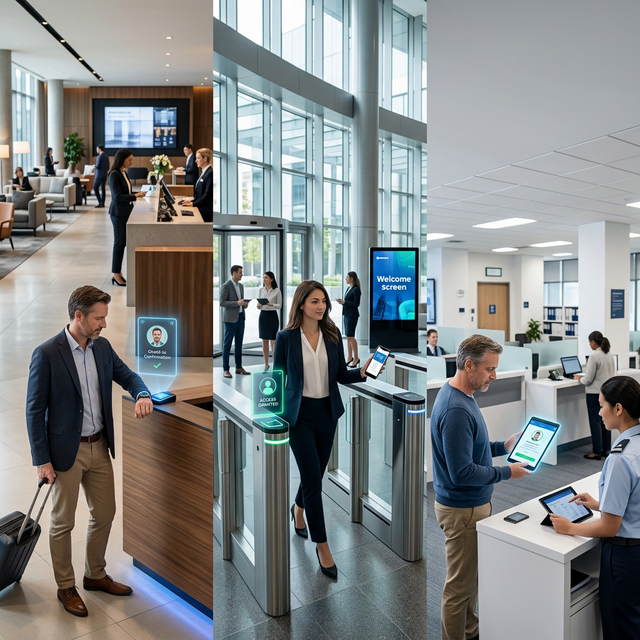
A guest arrives at a hotel. A contractor arrives at a building. A citizen arrives at a government office.
Three different environments. Three different industries. Three different operational contexts. But the first interaction in each case is identical: someone needs to establish that this person is who they claim to be.
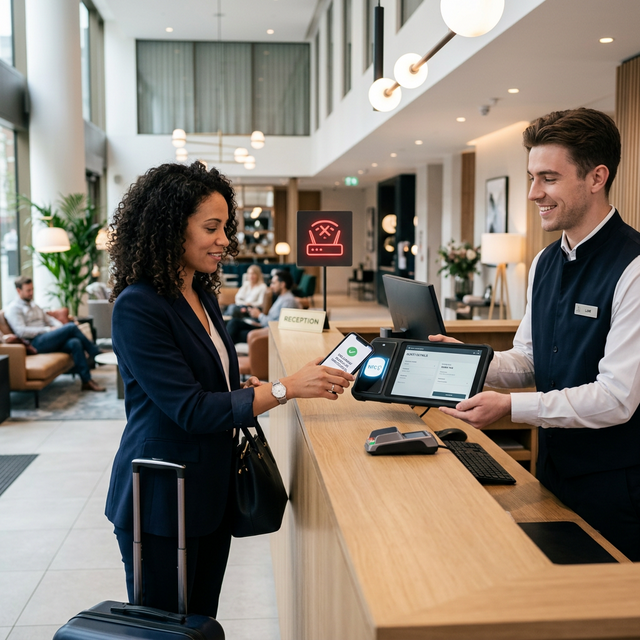
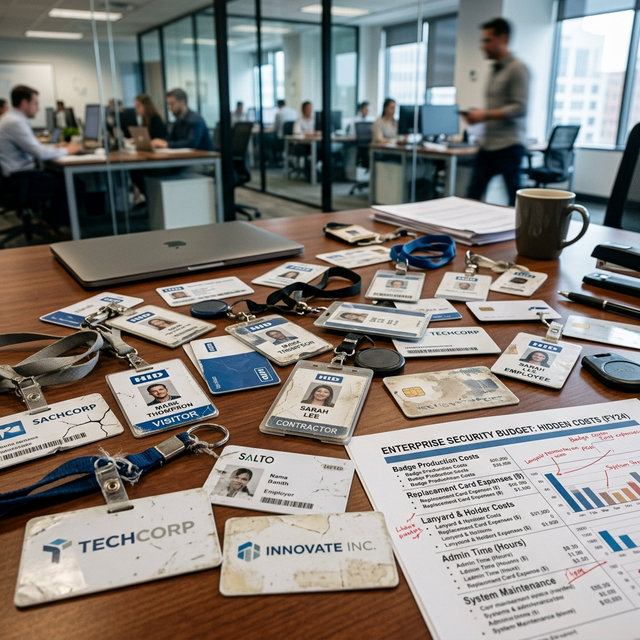
At the hotel, the front desk inspects a driver’s license, matches the name to a reservation, and encodes a keycard. At the building, the receptionist inspects an ID, types the visitor’s name into a system, and prints a badge. At the government office, a clerk inspects identification documents and looks up the citizen’s record.
Visual ID inspection. Manual data entry. Physical credential delivery. The workflow is the same — only the vocabulary changes.
The identity layer
What if the identity verification step — the part that’s common to all three environments — was solved once, with a single technology, and applied across all three?
That’s the thesis behind KeyShare.
The KeyShare Puck is an NFC device that reads government-issued digital credentials (mobile driver’s licenses, EUDI wallets, verifiable credentials) and verifies their cryptographic signatures. The verification is mathematical — not visual. The person taps their phone. The Puck confirms: this credential was issued by this authority, for this person, and hasn’t been tampered with.
What happens after the verification differs by context:
At the hotel: The verified identity matches to a reservation. A wallet room key is provisioned. A loyalty enrollment is offered. Payment is captured. The guest is checked in. The Guest Experience Platform (GEP) orchestrates the workflow.
At the building: The verified identity is matched against an access manifest. A site-specific credential is generated. The employee or visitor enters through the access point. The Panel Application and Connect manage the access control.
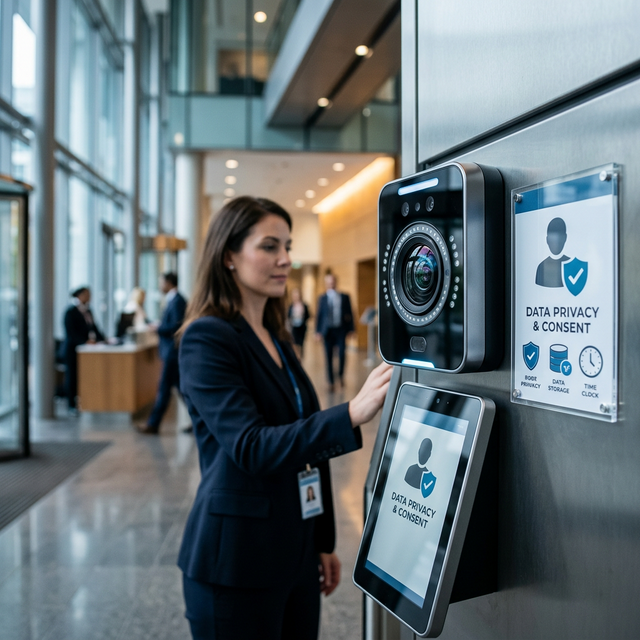
At the government office: The verified identity triggers a credential issuance workflow. A health certificate, a professional license, or a social benefit eligibility credential is issued to the citizen’s wallet. The Digital ID Platform manages the credential lifecycle.
Three workflows. One identity verification layer.
Why a single company, not three
The obvious question: why would one company serve hotels, buildings, and governments? These are different industries with different buyers, different sales cycles, and different operational requirements.
The answer is that the hard technology is the same.
NFC protocol engineering — establishing a secure session between a phone and a reader in under 500 milliseconds — is the same problem whether the reader sits on a hotel front desk or a building entrance or a government service counter. Cryptographic identity verification — checking an ISO 18013-5 digital signature against an issuing authority’s key — is the same computation in all three environments. Offline-first architecture — making the verification work without internet connectivity — is the same design challenge everywhere.
The orchestration on top of the identity verification is different by vertical. Hotels need PMS integration, lock vendor communication, and loyalty enrollment. Buildings need PACS integration, credential manifests, and OSDP reader communication. Governments need trust governance, multi-issuer ecosystems, and sovereign deployment.
But the technology underneath — the Puck hardware, the NFC protocol stack, the secure element, the cryptographic verification engine — is shared. Building it once and applying it across three verticals is more efficient than building three separate identity verification systems. And the standards compliance (ISO 18013-5, W3C Verifiable Credentials, OSDP v2.2) is maintained once, across all three applications.
The standards convergence
The three verticals are also converging on the same identity standards — not because KeyShare chose to use them everywhere, but because the standards themselves are cross-vertical.
ISO 18013-5 was designed for mobile driver’s licenses, but it’s the standard being adopted for building access identity verification and for government credential presentation. W3C Verifiable Credentials was designed for any credential type — and it’s being used for hotel loyalty passes, building access credentials, and government-issued certificates. OSDP v2.2 was designed for access control reader communication — and it’s the protocol KeyShare uses at both building readers and hotel lock integration points.
The standards don’t care whether the reader is in a hotel or a building. The cryptography doesn’t care whether the credential is a room key or a building pass. The NFC protocol doesn’t care whether the person tapping is a guest or an employee or a citizen.
Identity is the credential. Everything built on top of it — room keys, access passes, government services — is application logic.
What this means for the industry
The hospitality technology industry, the physical security industry, and the government identity industry have traditionally been separate ecosystems with separate vendors, separate conferences, and separate buyer personas.
Digital identity is the horizontal layer that connects them. As mDL adoption accelerates (a growing number of US states are live, with more in pilot, and the EU mandating digital wallets), the question “who is this person?” will be answered the same way in a hotel, a building, and a government office — with a cryptographically verified digital credential presented via NFC.
The companies that recognized this convergence early — that built the identity verification layer as a platform, not a vertical feature — will have an architectural advantage over companies that built separate identity solutions for separate industries.
The technology behind all three verticals traces back to a single origin: automotive secure access technology, adapted from 120M+ vehicles to the places where people live, work, and interact with institutions.