Wallet Keys for Hotels: Turning Identity Into the Room Key Layer
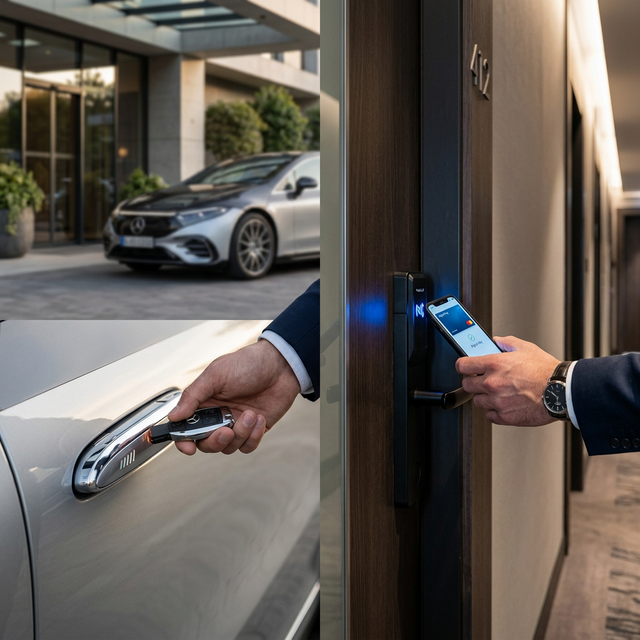
In hospitality, the most expensive problem is not the room itself. It is everything that happens before a guest gets access to it. The queue, the app download, the verification step, the friction between arrival and entry.
Hotels have spent years optimizing design, pricing, and service, yet the moment of arrival is still built around legacy identity assumptions. A reservation number, a front desk interaction, a plastic key card, or a mobile app that guests are expected to install, configure, and trust in a short window of time.
At KeyShare, we approach this differently. We treat identity as the credential itself. When identity is verified in a clean, cryptographic way, everything else becomes a delivery problem, not a process problem. Wallet keys for hotels are not just a new way to open doors. They are a shift in how hotels think about access, verification, and guest experience.
We are not modernizing the key card. We are replacing the entire idea of pre-issued credentials with real-time identity-based authorization.
The problem with traditional hotel keys
Hotels historically rely on a chain of assumptions:
- Identity is checked at the front desk
- A credential is issued after verification
- That credential is stored on a physical card or app
- The credential is then used repeatedly for access
Each step introduces friction, failure points, and operational overhead.
Mobile key apps attempted to solve part of this problem. In practice, they introduced a different issue. Adoption. Guests do not want to download apps for a single stay. They do not want account creation. They do not want onboarding steps that compete with travel fatigue.
The result is a split system. Some guests use mobile keys. Others still go to the front desk. Hotels end up maintaining parallel workflows.
That is not transformation. That is duplication.
Wallet keys for hotels as an identity layer
Wallet keys change the structure entirely.
Instead of issuing a static credential after check-in, we verify identity at the moment of interaction and deliver the correct credential instantly.
This means the key is not pre-issued. It is dynamically generated based on verified identity and context.
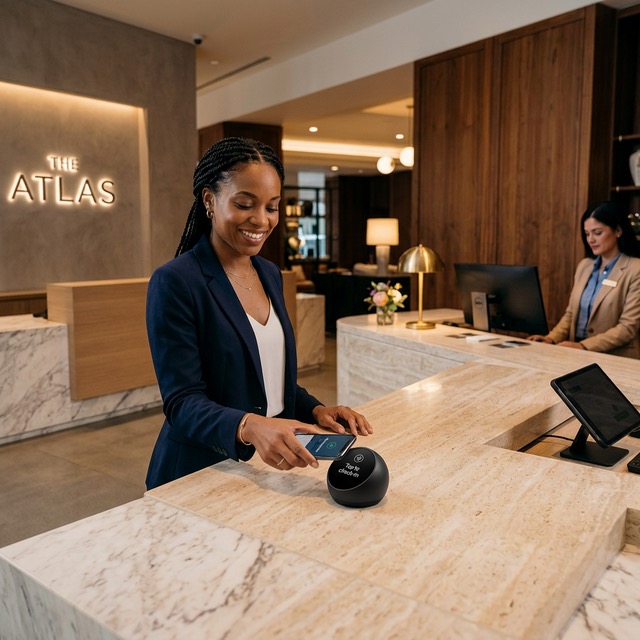
At KeyShare, this happens through a simple interaction model built around NFC and native digital wallets.
The guest experience is reduced to three steps:
- Tap the phone to the KeyShare Puck
- Identity is verified using cryptographic credentials
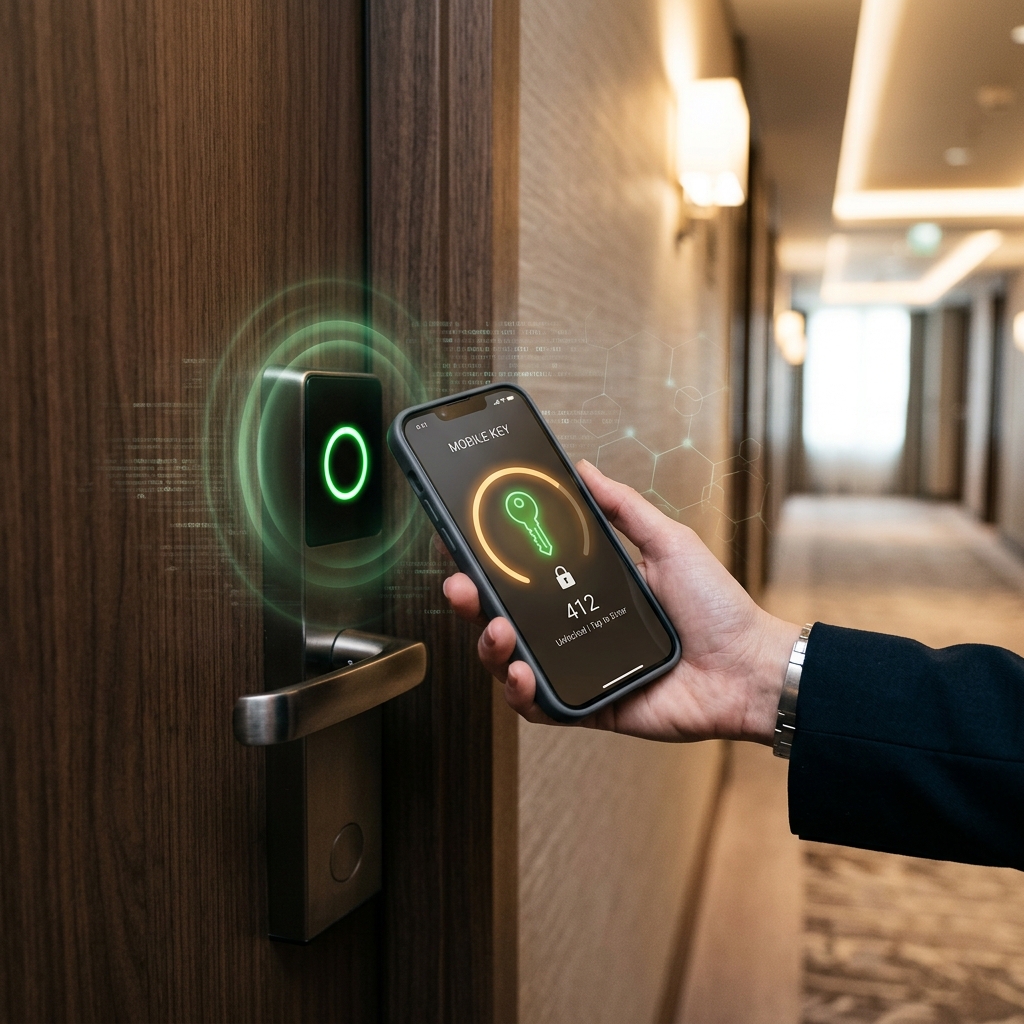
- The correct credential is delivered instantly to the device
No app installation. No account creation. No manual onboarding.
The key is not something the guest carries. It is something the system authorizes in real time.
The role of the KeyShare Puck
The KeyShare Puck is the physical trust point in this system.
It is an NFC identity verification device designed to initiate a secure, standards-based exchange between a guest’s mobile wallet and the hotel system.
It performs three critical functions:
- Initiates NFC-based identity interaction
- Reads and verifies digital credentials, including ISO 18013-5 mobile driver’s licenses and government-issued digital IDs
- Acts as a hardware root of trust for cryptographic validation
The Puck is not just a reader. It is a verification boundary. It ensures that identity is validated locally and securely before any credential is issued.
Why wallet-based access works where apps fail
Most digital key systems assume that user adoption is a software problem.
In reality, it is a behavioral constraint problem.
Guests are not opposed to digital access. They are opposed to friction at the wrong moment.
Wallet-based keys succeed because they use infrastructure that already exists on the device. Native wallets, government IDs, and secure credential stores are already part of modern mobile ecosystems.
There is nothing to install. Nothing to configure. Nothing to remember.
The guest simply presents identity the same way they would present a passport or driver’s license in the physical world — except now it is cryptographically verified and machine readable.
This is the key distinction. We are not digitizing a hotel key. We are aligning hotel access with how digital identity already works.
Cryptographic identity instead of token-based access
Traditional hotel systems rely on tokens. A room number encoded into a card, a QR code, or a mobile credential stored in an app database.
Tokens can be copied, lost, or misused. More importantly, they are detached from real identity once issued.
Wallet keys replace this model with verified identity as the foundation.
KeyShare uses on-device cryptographic verification with sub-second response times, ensuring that identity validation happens before authorization.
This approach supports:
- Offline-capable verification flows
- Secure credential issuance based on identity proof
- Reduced reliance on centralized session tokens
We also support standards-based identity ecosystems including ISO 18013-5 mobile driver’s licenses and ICAO-compliant digital travel credentials. This allows hotels to operate in environments where identity assurance is regulated, cross-border, or sovereign-controlled.
How wallet keys change hotel operations
The impact of wallet keys is not limited to guest convenience. It restructures operational flow.
Check-in becomes identity verification. Instead of check-in desks acting as credential issuers, they become identity validation points or can be eliminated entirely in some workflows. We have seen up to 80 percent reduction in check-in time compared to traditional front desk processes.
Front desk load decreases. Staff are no longer issuing keys, reissuing credentials, or troubleshooting mobile app issues. Their role shifts toward exception handling and guest service.
Credential management becomes dynamic. Keys are no longer static objects tied to room numbers. They become context-aware permissions tied to verified identity.
Integration without infrastructure replacement
One of the largest barriers to innovation in hospitality is infrastructure lock-in.
Hotels operate on PMS systems, access control panels, and reader networks that cannot be replaced easily.
KeyShare is designed to integrate into this reality.
We work with existing systems including:
- PMS platforms
- Mercury access panels
- OSDP-compliant readers
There is no rip-and-replace requirement. The wallet key layer sits above existing infrastructure and transforms how credentials are issued and validated — not how doors physically operate.
This makes adoption realistic for both independent hotels and global portfolios.
Security model built for trust at scale
Identity systems in hospitality must operate under strict security expectations. Guests expect convenience, but operators require assurance.
KeyShare is built with a hardware root of trust architecture supported by patented cryptographic verification systems.
Key security principles include:
- FIPS 140-2 validated cryptographic modules
- Hardware security module integration
- On-device identity verification under one second
- No dependency on persistent app sessions
This architecture is designed for environments where identity failure is not acceptable — including hospitality, government, and regulated access systems.
Why wallet keys represent a structural shift
Most hotel technology improvements optimize within the existing model.
Wallet keys redefine the model itself.
Instead of asking “how do we make check-in faster,” we ask “why does check-in exist as a credential issuance step at all.”
Once identity is verified directly from a trusted wallet, the hotel no longer needs to issue a separate access object. The identity itself becomes the authorization mechanism.
This shifts hospitality systems from credential-centric design to identity-centric design.
That is the core transformation.
At KeyShare, we built our system around one principle. Identity is the credential. Everything else is friction.
Our platform delivers wallet keys directly to mobile devices using NFC-based identity verification, without requiring apps or accounts.
Through the KeyShare Puck, we enable hotels to:
- Verify guest identity instantly
- Accept government-issued digital IDs and mobile credentials
- Deliver room keys directly into native wallets
- Integrate with existing hotel infrastructure
- Reduce onboarding friction to a single tap
The future of hotel access is not another digital key format. It is a verified identity exchange that happens at the moment of need.
Wallet keys represent this shift. They remove the dependency on pre-issued credentials and replace it with real-time authorization based on trusted identity sources.
Hotels do not need more ways to store keys. They need fewer reasons to issue them.
At KeyShare, we are building the infrastructure where a single NFC tap becomes the universal interface for identity, access, and authorization. Not because it is simpler — because it is the only model that scales without friction.