The 10% Problem
Every major hotel brand has launched a mobile key app. Hilton. Marriott. Hyatt. IHG. The technology works — Bluetooth Low Energy communicates with the door lock, and the guest’s phone becomes the key.
But after a decade of investment, mobile key adoption hovers between 5% and 10% across the industry. At some properties, it’s below 3%.
The technology isn’t the problem. The app download requirement is.
Why Guests Don’t Download Hotel Apps
Consider the guest experience: arrive after a long flight, walk to the front desk, and be told you need to download an app (60–120 MB), create an account, verify your email, enable Bluetooth, grant permissions, and then wait for the key to provision.
Most guests say “just give me a plastic card.” And who can blame them?
- Friction kills adoption. Every additional step reduces conversion. An app download is five steps before the guest even gets to the key.
- Storage is precious. Guests don’t want another app they’ll use for one stay and delete.
- Brand fragmentation. A frequent traveler would need a different app for every hotel brand. Nobody wants 12 hotel apps on their phone.
What Comes Next: Wallet Keys
The solution isn’t a better app — it’s eliminating the app entirely.
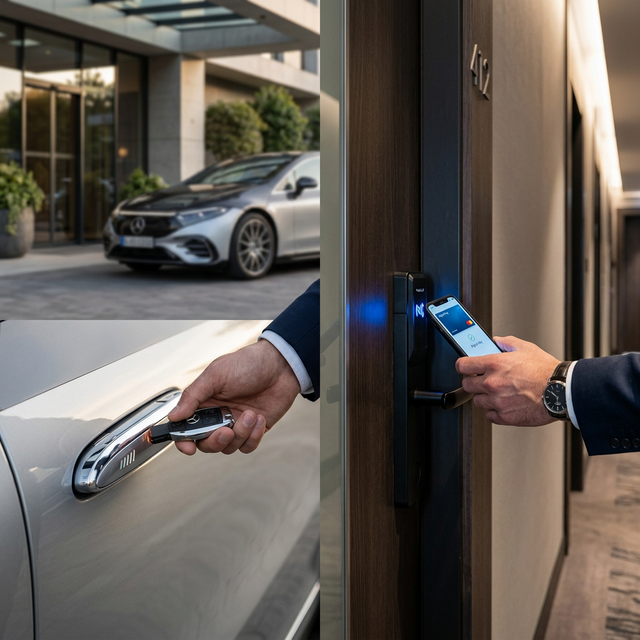
Apple Wallet and Google Wallet are already on every smartphone. They’re the native credential store — boarding passes, event tickets, loyalty cards, transit passes. Room keys belong there too.
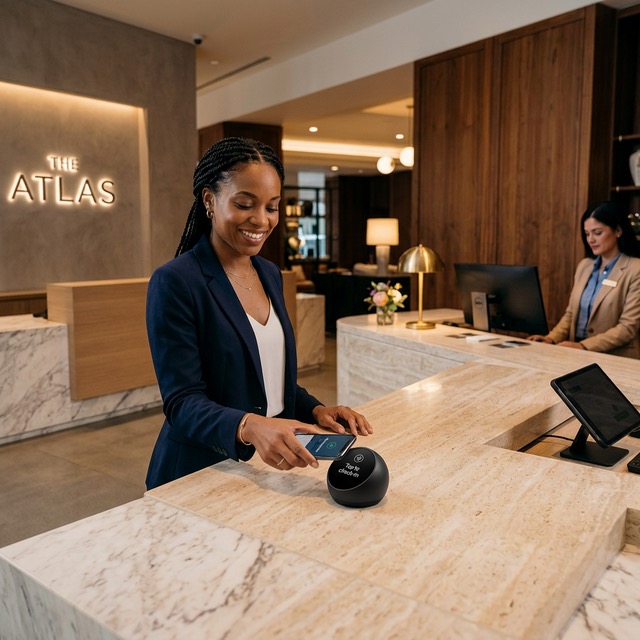
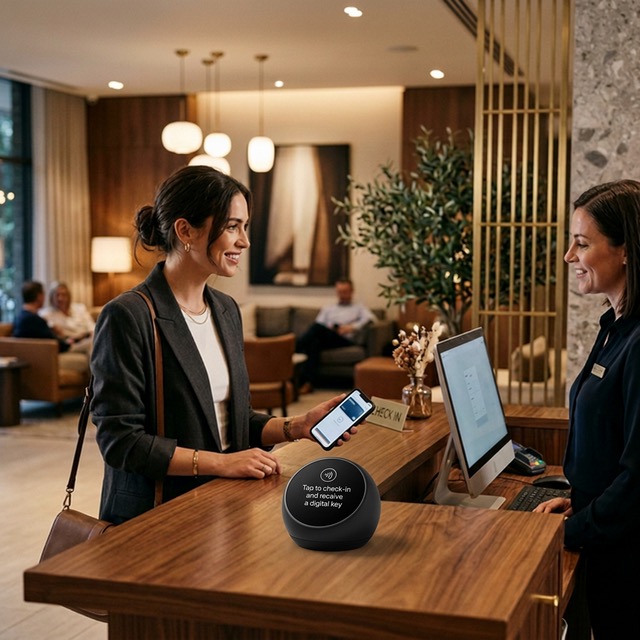
With KeyShare, the guest taps their phone on a Puck at the front desk. The Puck verifies their identity using their digital ID (ISO 18013-5 mobile driver’s license) or reservation, and then delivers a wallet room key — directly into Apple Wallet or Google Wallet.
No app download. No account creation. No Bluetooth pairing. One tap, identity verified, key delivered.
The Numbers
Because there’s no app to download, KeyShare is designed for 70%+ adoption rates — a 7x improvement over the industry average. Early deployments show:
- 80% reduction in check-in time
- Sub-second identity verification
- Zero apps required
The Implications
When mobile key adoption goes from 8% to 70%+, the economics change fundamentally:
- Front desk labor shifts from key-making to hospitality
- Self-service check-in becomes viable without kiosk hardware
- Loyalty enrollment happens at the same tap — massively higher conversion
- Digital ID acceptance replaces manual ID scanning — compliance-ready, guest-friendly
The mobile key app era is ending. The wallet key era is beginning.